
Relevant medical research updates, sent to your inbox
Set up alerts for papers, clinical trials, diseases, companies, or keywords. Evidence Watcher monitors the sources, detects new publications and trial changes, and sends you a concise summary of what changed and why it matters.
Use cases
Monitoring made for you
Stay ahead of evidence that changes the field. Track papers and trials across disease areas, so important new findings are surfaced quickly.
Spot risks to conviction faster. Monitor company programmes, named trials, results, and publications before key decisions.
Keep track of competitor programmes. Follow competitor trials, publications, and emerging evidence that could affect strategy.
Stay current without the noise. Monitor therapy areas, biomarkers, or evidence themes without manually reviewing every update.
Catch important trial changes early. Watch specific studies for recruitment changes, record updates, and new results.
Keep communities informed with timely evidence. Track rare disease papers, trial updates, and named studies with source-linked summaries.
How it works
Know what changed, skip what didn’t
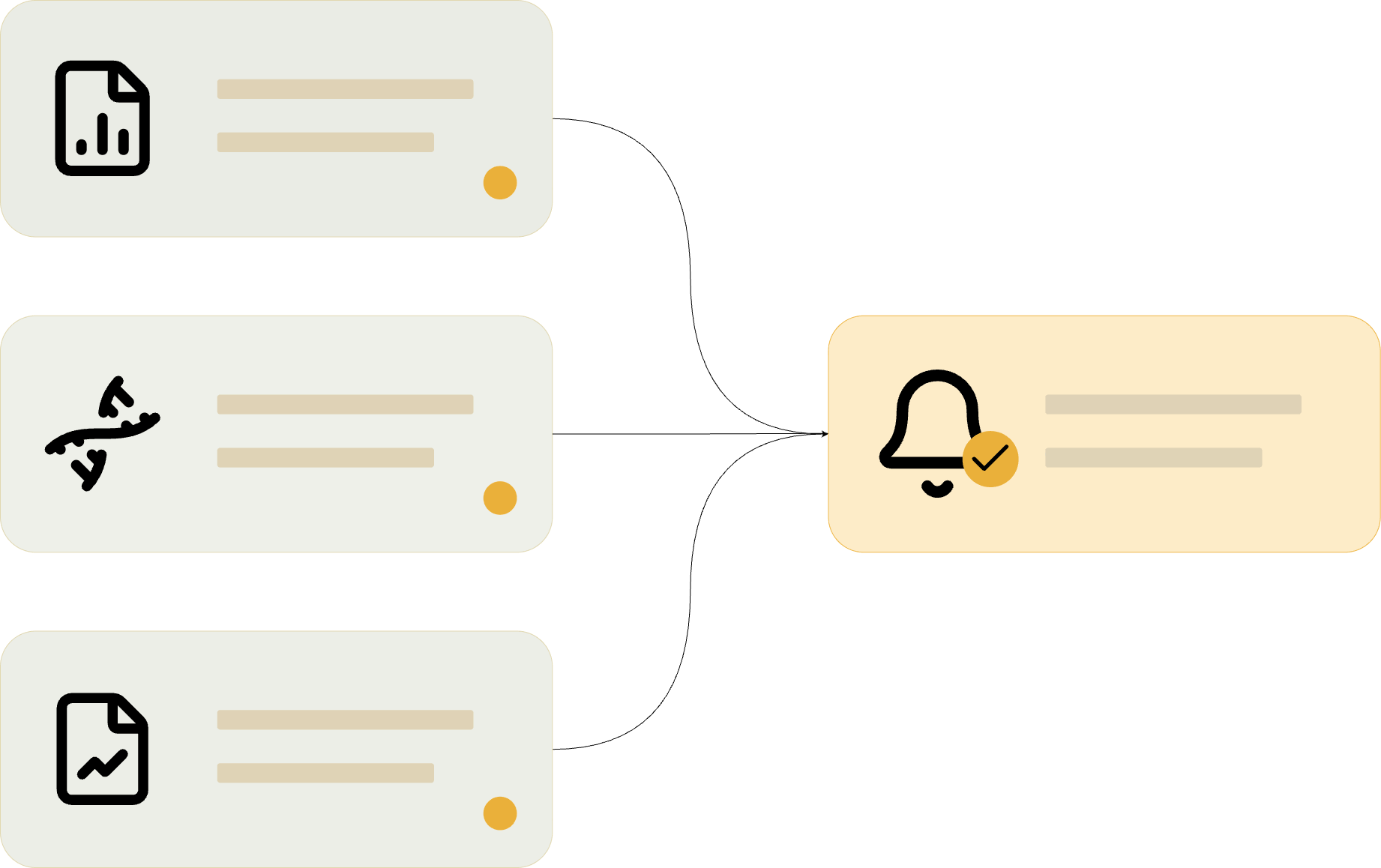
Monitor papers and trials with advanced search, or follow one specific NCT ID.
We only notify you when there is something new for that alert run.
New findings are synthesized into a clear summary, so you can quickly understand what changed and why it matters.
Pricing
Straightforward pricing
FAQ
Common questions
What do alerts monitor?
Each alert tracks either a keyword search (papers + trials) or one specific clinical trial by its ID.
When do you email me?
Email timing is set per alert, and we only send when there are new results for that run.
What sources do you use?
PubMed and ClinicalTrials.gov are used as primary sources to find advancements in research.
What’s the “synthesis”?
We add an AI summary so you can understand the “so what” before clicking through.
Can I edit alerts later?
Yes—alerts are designed to be edited quickly so you can stay focused on what matters.